Limits explained
Split limits vs. a combined single limit: three caps or one pool
Liability limits come in two shapes. Split limits put a separate ceiling on each kind of claim; a combined single limit puts one ceiling on the whole accident. The same crash can leave you owing money under one and nothing under the other.
By CoverOath Editorial Team Updated 7 min read
The promise, in short
A split limit such as 100/300/100 means $100,000 for one injured person, $300,000 for all injuries in the accident and $100,000 for property damage. A combined single limit (CSL) of $300,000 is one amount that pays injuries and property damage from the same crash in any mix. Split limits protect the property budget but cap each injured person; a single limit lets one large claim use the whole pool but runs out sooner when many people are hurt. Some states, such as Kentucky and Tennessee, let you meet the minimum either way. Test your own numbers in the liability limits calculator.
- Split limits
- Three separate caps
- Single limit
- One pool per accident
- 100/300/100 ceiling
- $400,000 per accident
- Kentucky CSL option
- $60,000 vs. 25/50/25
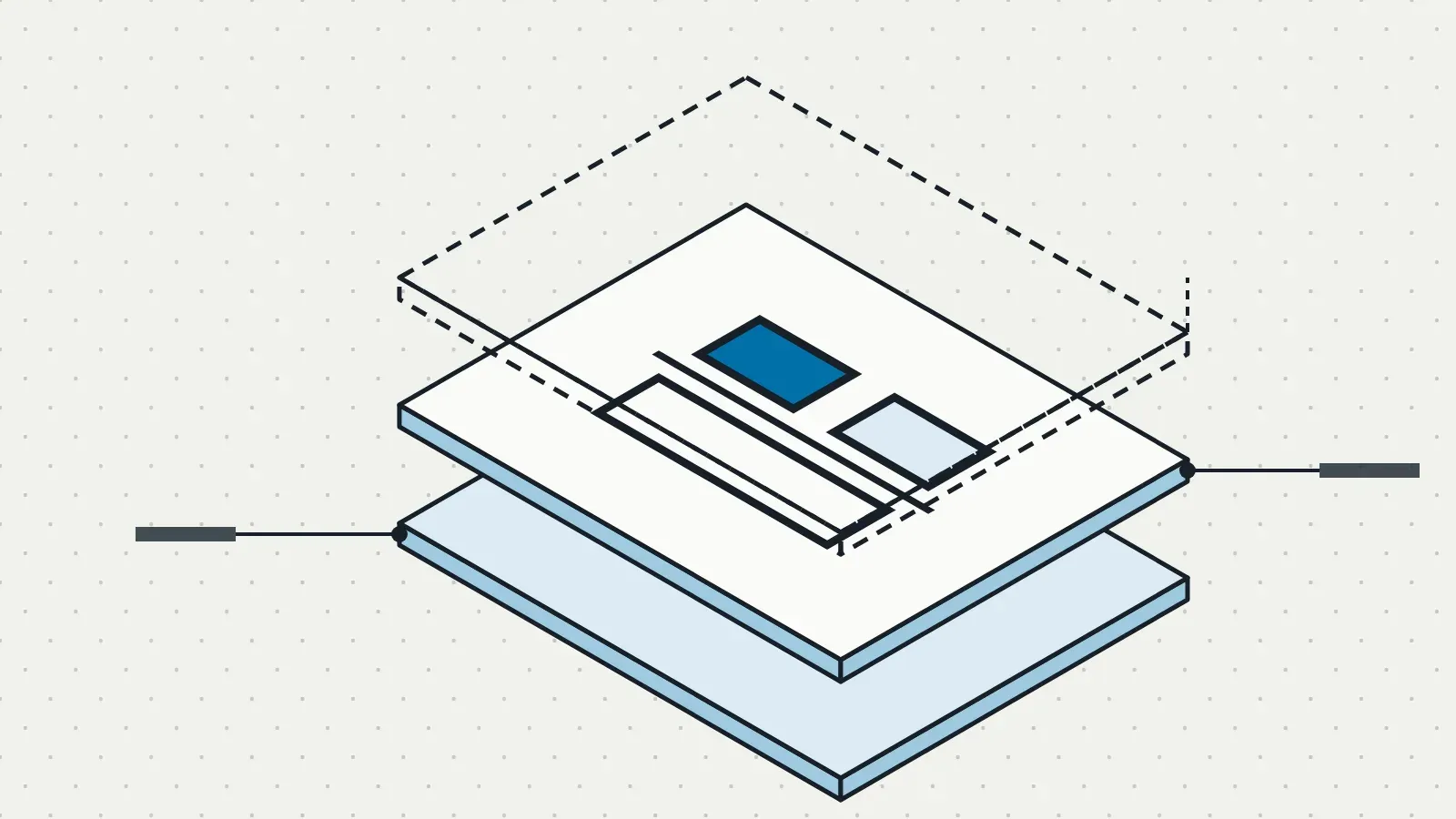
How to read split limits
Your declarations page shows liability as three numbers separated by slashes. Each number is in thousands of dollars, and each is a separate cap. The first two belong to bodily injury liability; the third belongs to property damage liability.
| Number | Amount | What it caps |
|---|---|---|
| First (per person) | $100,000 | Injury claims of any one person |
| Second (per accident) | $300,000 | Injury claims of everyone hurt in one crash, combined |
| Third (property) | $100,000 | Damage to other people's cars and property in one crash |
The caps nest. No single injured person can collect more than $100,000, even when the $300,000 per-accident amount is untouched. Property damage has its own $100,000, which injury claims can never use, and unused property money cannot move over to injuries. The most the policy can pay for one crash is $300,000 for injuries plus $100,000 for property, or $400,000.
How a combined single limit works
A combined single limit is one figure, such as $300,000, that covers bodily injury and property damage from one accident together. A CSL usually has no separate per-person cap: if one person's injuries are worth the whole amount and nothing else was damaged, the whole amount can go to that person. Once the pool is spent, the policy pays nothing more for that crash, whatever kind of claim is left.
- Upside: one large claim, injury or property, is not stopped by a smaller sub-limit.
- Downside: a crash with many claims draws them all from one pool, so the total ceiling can be lower than a split policy with similar numbers.
- Where you see it: not every insurer writes a single limit on a personal auto policy. Ask whether yours offers one in your state, and at which amounts.
The same crashes under both shapes
The three examples below compare a 100/300/100 split limit with a $300,000 combined single limit. The figures are illustrations, not claim values. In each case, any amount above what the policy pays is a claim against you personally.
| Line | 100/300/100 split | $300,000 CSL |
|---|---|---|
| Injury paid | $100,000 (per-person cap) | $180,000 |
| Property paid | $20,000 | $20,000 |
| Total paid | $120,000 | $200,000 |
| Left for you | $80,000 | $0 |
| Line | 100/300/100 split | $300,000 CSL |
|---|---|---|
| Injury paid | $270,000 | Shares the $300,000 pool |
| Property paid | $60,000 | Shares the $300,000 pool |
| Total paid | $330,000 | $300,000 |
| Left for you | $0 | $30,000 |
| Line | 100/300/100 split | $300,000 CSL |
|---|---|---|
| Injury paid | $40,000 | $40,000 |
| Property paid | $100,000 (property cap) | $150,000 |
| Total paid | $140,000 | $190,000 |
| Left for you | $50,000 | $0 |
Crash A is the per-person cap at work: the split policy stops at $100,000 for the injured driver although $200,000 of injury money is unused. Crash C is the property cap doing the same thing. Crash B runs the other way. Every claim fits inside its split sub-limit, so the split policy pays $330,000 in total, while the single pool runs dry at $300,000.
The arithmetic in Crash B is worth tracing once. Each injured person's $90,000 is under the $100,000 per-person cap. The three together, $270,000, are under the $300,000 per-accident cap. The $60,000 of car damage is under the separate $100,000 property cap. Nothing is cut, so the split policy pays every dollar. The single limit receives the same $330,000 of claims against one $300,000 pool, and $30,000 is left over. That $30,000 does not disappear: whichever claimants are not paid in full can pursue you for the rest, and the policy has nothing left to answer with.
State minimums written both ways
Several states let a driver meet the minimum with either shape. The single-limit alternative is not always the sum of the split amounts. In Utah, Maine, Rhode Island and the Pennsylvania option, the single limit equals the per-accident injury amount plus property damage. In Kentucky and Tennessee it is lower.
| State | Split minimum | Single-limit option | Per-accident split total |
|---|---|---|---|
| Kentucky | 25/50/25 | $60,000 | $75,000 |
| Tennessee | 25/50/25 | $65,000 | $75,000 |
| Rhode Island | 25/50/25 | $75,000 | $75,000 |
| Utah | 30/65/25 | $90,000 | $90,000 |
| Maine | 50/100/25 | $125,000 | $125,000 |
| Pennsylvania | 15/30/5 | $35,000 (sold by some insurers) | $35,000 |
At the minimum, the trade is sharp. A Kentucky driver choosing the $60,000 single limit gives up $15,000 of total ceiling compared with 25/50/25, in exchange for letting one injured person use more than $25,000. Neither minimum is large next to a serious injury; the state menus list each state's floor.
Where the shape shows up elsewhere in your policy
Uninsured and underinsured motorist limits often follow the same shape as your liability. Maine's Bureau of Insurance, for example, sets the UM/UIM floor at $50,000/$100,000 or a $100,000 combined single limit. If you switch liability to a single limit, ask how the insurer will write your UM line.
An umbrella policy sits on top of your auto liability and expects a minimum underlying limit before it pays. Insurers state that requirement as split limits, a single limit, or both. Confirm that the shape you buy meets the umbrella's wording, or you may have to pay the difference yourself; see umbrella insurance.
How to choose between them
- Find your largest single risk. If one badly injured person is the claim you fear, a single limit or a high per-person number addresses it.
- Count the people you carry. A full car or a multi-car crash spreads claims across people, which split limits handle with a higher total ceiling.
- Look at the property number. A third number of $25,000 can be used up by one newer car; raise it or choose a single limit that can absorb it.
- Price both at equal ceilings. Ask for 100/300/100 and a $300,000 or $400,000 CSL, then run the gaps through the liability limits calculator.
For the broader question of what total to carry, see how much liability coverage you need.
Questions drivers ask
Is a $300,000 combined single limit the same as 100/300/100?
No. The CSL can pay up to $300,000 per accident in any mix; 100/300/100 can pay up to $400,000 but caps each person at $100,000 and property at $100,000. Which pays more depends on the crash.
What does 25/50/25 mean?
$25,000 for one injured person, $50,000 for all injuries in one accident and $25,000 for property damage. All three are separate caps.
Can I meet my state's minimum with a single limit?
In some states, yes. Kentucky, Tennessee, Rhode Island, Utah and Maine list a single-limit amount in their minimums, and Pennsylvania notes some insurers sell one. Check your state menu.
Does a combined single limit pay my own injuries?
No. It is liability coverage, so it pays other people. Your own injuries go to PIP, MedPay, health insurance or UM, depending on the crash.
Drawn from
- Kentucky Department of Insurance — Review requirements checklist: personal auto (KRS 304.39-110)
- Tenn. Code §55-12-102, financial responsibility amounts (2023 Code, Justia)
- R.I. Gen. Laws §31-47-2, definitions (minimum limits in (13)(i)(A))
- Utah Code §31A-22-304, minimum liability limits (2025 Utah Code, Justia)
- Maine Bureau of Insurance — Insurance required by law
- Pennsylvania Insurance Department — Auto insurance
Facts on this page were checked against these sources on November 15, 2026. The state minimums and single-limit options come from the statutes and insurance department pages behind each CoverOath state menu; the crash figures are worked illustrations, computed exactly, not claim values.
Have this coverage priced
CoverOath doesn't sell insurance. Answer five questions and CoverOath passes your request to licensed insurance agents and insurers, who can quote the coverage; you decide whether to buy anything.
- 1 The coverage you want priced.
- 2 Where an agent can reach you, and your consent.
- 3 A licensed insurance agent or insurer contacts you with a quote. Nothing is bought until you agree.
CoverOath is not paid by you. The licensed insurance agents and insurers who contact you set their own prices and terms. How we make money.
Adjacent layers
-
Fine print
How much liability coverage you need
State floors run as low as 15/30/5. Size your limit to what you own and earn, then add an umbrella if needed.
-
Core coverage
Bodily injury liability
Pays other people's injury claims when you cause a crash, up to a per-person and a per-accident limit.
-
Core coverage
Property damage liability
Pays for other people's cars, fences and buildings you damage, up to one limit for the whole crash.