Offer, reject in writing
Kentucky coverage menu: liability, $10,000 PIP and a choice about no-fault
Kentucky policies come with no-fault personal injury protection and uninsured motorist coverage. You can file a form to step out of no-fault, sign away UM, or ask for underinsured motorist coverage, and each choice changes what pays after a crash.
By CoverOath Editorial Team Updated 6 min read
The promise, in short
Kentucky requires liability of at least 25/50/25, or a $60,000 combined single limit. Every car policy also carries $10,000 of personal injury protection (basic reparation benefits) unless you reject no-fault by filing a form with the Department of Insurance. Uninsured motorist coverage is included at 25/50 unless the named insured rejects it in writing, and underinsured motorist coverage must be made available on request. Comprehensive must pay safety glass with no deductible. Kentucky Department of Insurance: 800-595-6053.
- Minimum liability
- 25/50/25 or $60,000 CSL
- PIP
- $10,000 unless rejected
- UM/UIM
- UM unless rejected; UIM
Kentucky coverage menu
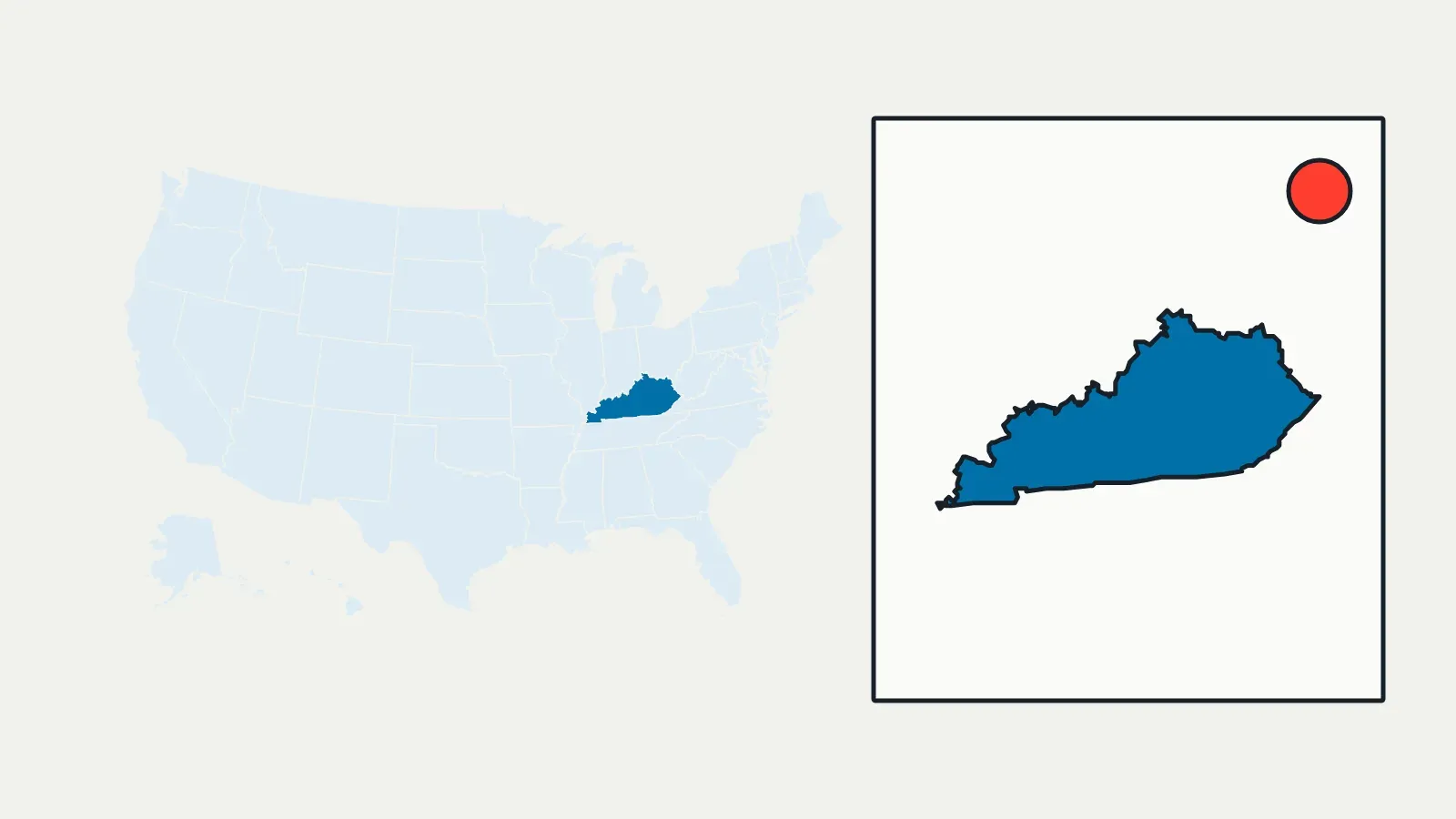
What a Kentucky policy must carry
KRS 304.39-110 sets the security every Kentucky vehicle owner must keep. You can meet it with split limits or with one combined limit for all injuries and property damage in a crash. Either way, liability pays the other people, not you.
| Coverage | Split limits | Single-limit option |
|---|---|---|
| Bodily injury, per person | $25,000 | $60,000 combined for all injury and property damage in one accident |
| Bodily injury, per accident | $50,000 | Included in the $60,000 |
| Property damage | $25,000 | Included in the $60,000 |
A combined single limit lets one badly injured person use more than $25,000 of the limit, but the whole accident still shares $60,000. Split limits vs. combined single limit shows the difference with numbers.
PIP and the no-fault choice
Kentucky's PIP, called basic reparation benefits, pays up to $10,000 per person for medical expenses, lost wages (capped at $200 a week), replacement services and survivors' benefits, whoever caused the crash. It is part of every car policy; for motorcycles it is optional. Insurers must offer $250, $500 or $1,000 PIP deductibles on request, and added PIP above $10,000.
In return, the right to sue for injuries, including pain and suffering, is limited to cases with more than $1,000 of medical expenses, a broken bone, a permanent injury or death. You can reject PIP and those limits by filing a written rejection form with the Department of Insurance. If you do, you cannot collect basic PIP unless you buy it back, and the Department warns your liability premium may be higher.
- Which policy pays: the policy on the vehicle you were in, or the vehicle that struck you if you were on foot.
- Uninsured owners: if you own a vehicle that has no insurance, you cannot collect PIP.
- No policy applies: the claim can go to the Kentucky Assigned Claims Plan.
- Whole household rejects: the policy must then carry guest PIP for passengers and pedestrians.
Uninsured and underinsured motorist coverage
Uninsured motorist
Included at 25/50 unless the named insured rejects it in writing (KRS 304.20-020). See uninsured motorist coverage.
Underinsured motorist
Must be made available on request (KRS 304.39-320). No minimum limit applies, and it stays available even if you reject UM. See UIM.
The difference matters. UM arrives on the policy unless you sign it away; UIM is on the policy only if you ask for it. If you want protection against a driver who carries only the 25/50 minimum, check that UIM appears on your declarations page with a limit you chose.
We found no Kentucky statute that sets a stacking rule for UM or UIM limits across several cars or policies, and the Department's checklist does not mention one, so the limit of liability section of your policy is where the answer starts. How stacking works explains what to look for.
Glass with no deductible
KRS 304.20-060 requires a policy that includes comprehensive coverage to pay in full for repairing or replacing safety glass, including the windshield, door and window glass, with no deductible. A separate rule, KRS 304.9-470, keeps insurers from requiring you to use a particular glass company or location. If you carry liability only, there is no glass coverage to apply this rule to. Outside Kentucky, the full glass add-on does a similar job.
Where to check and complain
- Read your declarations page for liability, PIP, UM and UIM limits and any PIP deductible.
- Check whether a no-fault rejection is on file for anyone in your household if PIP is missing.
- Call the Kentucky Department of Insurance at 800-595-6053 (502-564-3630 from outside Kentucky) with questions or complaints.
Questions drivers ask
Is PIP required in Kentucky?
It is part of every car policy unless you reject no-fault by filing a written rejection with the Department of Insurance. Rejecting it also removes the limits on lawsuits that come with it.
Do I get underinsured motorist coverage automatically in Kentucky?
No. Insurers must make it available, but it is added only if you ask for it. Uninsured motorist coverage, by contrast, is included unless you reject it in writing.
Do I pay a deductible for a cracked windshield in Kentucky?
Not if you carry comprehensive coverage. Kentucky law requires comprehensive to pay for safety glass repair or replacement with no deductible.
Is the $60,000 single limit better than 25/50/25?
Neither is better in every crash. The single limit gives more room for one claim; split limits reserve $25,000 for property. Compare both in the liability limits calculator.
Drawn from
- Kentucky Department of Insurance — Review requirements checklist: personal auto (KRS 304.39-110, 304.20-020, 304.39-320, 304.20-060)
- Kentucky Department of Insurance — No-fault brochure (January 2021)
- KRS 304.39-020 (definitions; 2026 Ky. Acts ch. 149, effective July 15, 2026)
Facts on this page were checked against these sources on November 15, 2026. The PIP fee-schedule rule applies to benefits issued or renewed on or after July 15, 2026.
Have this coverage priced
CoverOath doesn't sell insurance. Answer five questions and CoverOath passes your request to licensed insurance agents and insurers, who can quote the coverage; you decide whether to buy anything.
- 1 The coverage you want priced.
- 2 Where an agent can reach you, and your consent.
- 3 A licensed insurance agent or insurer contacts you with a quote. Nothing is bought until you agree.
CoverOath is not paid by you. The licensed insurance agents and insurers who contact you set their own prices and terms. How we make money.
Adjacent layers
-
Core coverage
Personal injury protection (PIP)
Pays medical bills and lost income whoever caused the crash. Mandatory in the 12 no-fault states.
-
Core coverage
Underinsured motorist coverage (UIM)
Pays your injuries above the at-fault driver's limit. Added-on UIM stacks on their payment; offset UIM subtracts it.
-
Add-on
Full glass coverage
Removes or lowers the comprehensive deductible on glass. Florida, Kentucky and South Carolina set it at $0 by law.