Liability
Property damage liability: paying for what you break
The third number in your liability limits is a single cap for everything you damage in one crash. Here is what that promise reaches, what it never pays, and how to tell whether the number is big enough.
By CoverOath Editorial Team Updated 6 min read
The promise, in short
Property damage liability pays other people for property you damage in a crash you cause: their car, a fence, a storefront, a utility pole. It is the third number in a split limit such as 30/60/25, and that one amount is the most the insurer pays for all property damage in a single accident. It has no deductible and it never pays for your own car; that is collision coverage. A minimum limit can be used up by one newer vehicle, so look at your state's menu as a floor, not a target.
- Pays for
- Others' property you hit
- Limit
- One cap per accident
- Texas minimum
- $25,000
- Your own car
- Not covered here
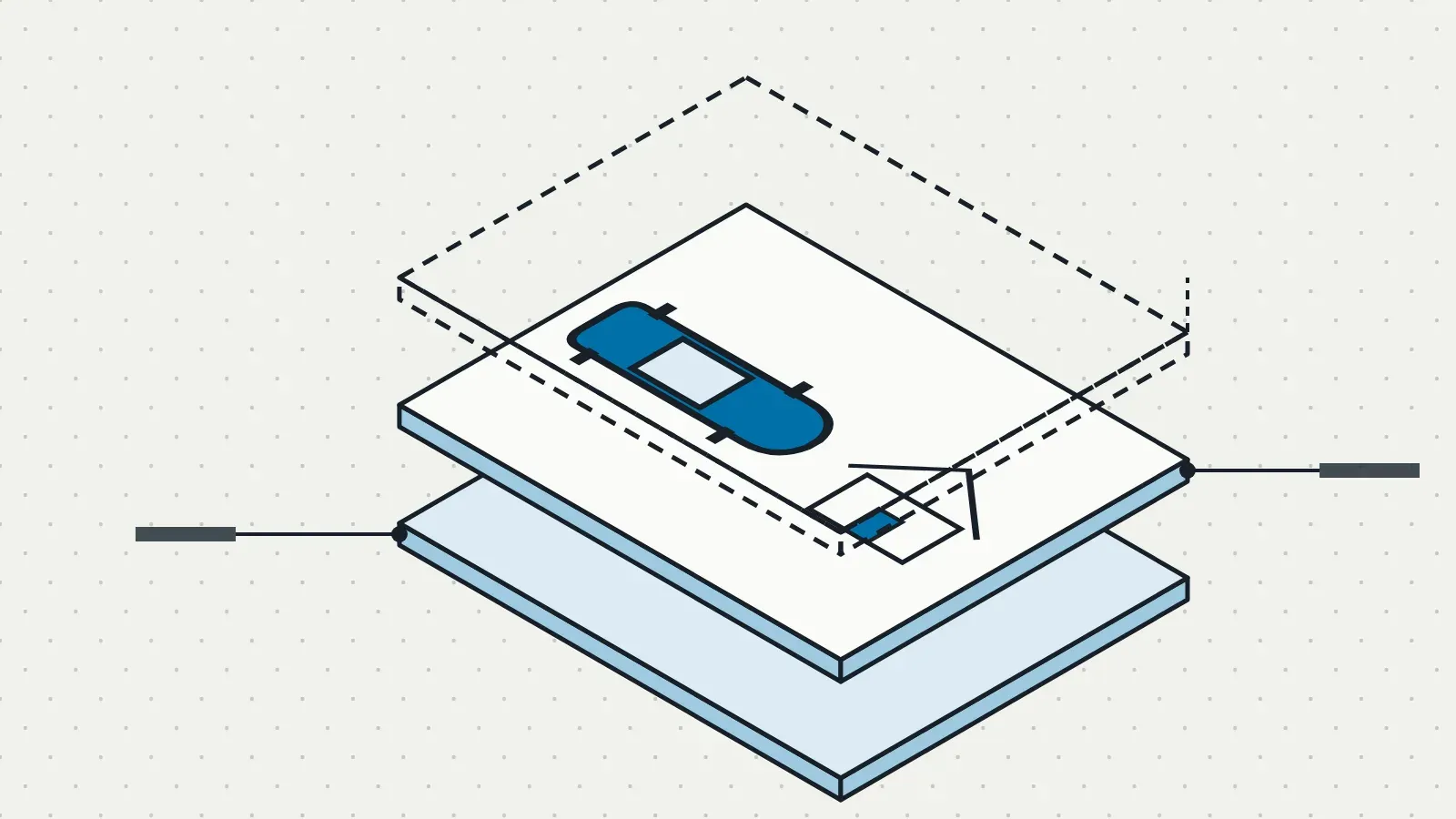
The insuring promise
Property damage liability is the half of your liability coverage that deals with things rather than people. If you, or someone driving your car with your permission, cause a crash, the insurer pays the owners of the property that was damaged, up to your limit. The Insurance Information Institute lists other vehicles along with buildings, lamp posts, fences and other structures your car hits.
- Trigger: damage to someone else's property that a covered driver is legally responsible for.
- Who gets paid: the property's owner, such as another driver, a homeowner, a business or a city.
- What is paid: repair or replacement of the damaged property, and other losses the owner can legally recover from you.
- What is never paid: damage to your own car or to property you own.
Its partner on the same policy is bodily injury liability, which pays for the people you injure. Most policies quote the two together as one liability line, but each has its own cap.
One number for the whole crash
In a split limit, the NAIC's auto shopping guide explains, the third number is the most the policy will pay for all property damage you cause in one crash. There is no per-car or per-owner cap inside it: every owner with a claim draws from the same amount.
| Damaged property | Claim | Paid from the limit |
|---|---|---|
| Car you rear-ended | $19,000 | $19,000 |
| Car pushed into the one ahead | $8,000 | $6,000 |
| Shop window | $3,000 | $0 |
| Total | $30,000 | $25,000; $5,000 left for you |
Read the table from the bottom. Three owners claimed $30,000 in total, and the policy stopped at $25,000. The first car took most of the limit, the second was paid in part, and the shop received nothing from the insurer. The $5,000 that is left is not lost: it becomes a claim against you personally, with your savings and wages behind it.
Who receives what when claims exceed the limit depends on how the insurer settles them, and the owners left short can come to you for the rest. The Texas Department of Insurance says plainly that when damages exceed your limits you pay the difference, and that minimum limits may be too low if you total another car or cause a multi-vehicle accident.
What it does not pay
Some limits come from the nature of the coverage, others from the exclusions in the policy. Wording differs by insurer, but these are the common ones:
- Your own car. Damage to the car you were driving goes to collision coverage, after your deductible.
- Damage you cause on purpose. The Texas Department of Insurance lists intentional damage among the things most policies don't cover.
- Some uses of the car. The same list includes ride-hailing and paid delivery, racing, business use and accidents in Mexico.
- Your own property. If you back into your own garage door, liability has no one to pay; look at your homeowners policy and collision coverage instead.
When someone hits your car instead
The same coverage works in your favor when the other driver is at fault: their property damage liability pays for your car. If their limit is too low or they have no insurance, you turn to your own policy. That is uninsured motorist property damage in states that offer it, or collision coverage, where your insurer may later try to recover what it paid. The Insurance Information Institute notes that if it succeeds, you get your collision deductible back.
What your policy expects from you
The insurer's promise to pay comes with duties on your side, set out in the policy's conditions. Most policies ask you to report an accident promptly, send on any demand or lawsuit you receive, and cooperate with the investigation. Many also say you should not agree to pay the other side, or admit fault in a way that commits the insurer, without its consent.
In return, the insurer deals with the property owner, investigates whether you were legally at fault, and pays a valid claim within your limit. If you are tempted to settle a small claim out of pocket to keep it off your record, ask your insurer first how its policy treats a payment you make on your own.
How to choose a limit
- Picture the costliest thing you could hit. A newer pickup, a luxury car, a bus shelter or the front of a building can each run past a minimum limit by itself.
- Add a second car. Chain-reaction crashes put several owners on the same limit.
- Match your other limits. Many drivers raise property damage together with bodily injury; the liability limits calculator shows how much a large claim would leave uncovered.
- Check whether one number would suit you better. A combined single limit lets injury and property claims share one larger amount.
The Insurance Information Institute's general advice applies here too: buy enough liability coverage to protect assets such as your home and savings, since a judgment above your limit can reach them.
State rules in one sentence
States with a liability requirement include a property damage minimum, and the amounts differ; even Florida, which does not require bodily injury liability for most private cars, requires property damage liability. Your state menu page shows the current figure.
Questions drivers ask
Does property damage liability pay to fix my car?
No. It pays for other people's property. Damage to your own car is covered by collision coverage if you carry it, or by the at-fault driver's insurer when someone else caused the crash.
I hit a parked car and no one was there. Is that covered?
Yes, this is a typical property damage liability claim, paid to the parked car's owner. Leave your contact details as your state's law requires, and report the claim to your insurer.
Is there a deductible on property damage liability?
No. Liability coverage pays the other party up to your limit without subtracting a deductible. Deductibles apply to coverages for your own car, such as collision and comprehensive.
What if the damage is more than my limit?
Your insurer pays up to the limit and the property owner can seek the rest from you. Raising the limit or adding an umbrella policy reduces that risk.
Drawn from
- NAIC — A Shopping Tool for Auto Insurance (2023), as published by the Nebraska Department of Insurance
- NAIC — Auto insurance consumer guide
- Texas Department of Insurance — Auto insurance guide
- Insurance Information Institute — What is covered by a basic auto insurance policy?
Facts on this page were checked against these sources on November 15, 2026. The $25,000 figure is the Texas minimum as stated by the Texas Department of Insurance; the sharing table uses round illustrative figures, not a real claim.
Have this coverage priced
CoverOath doesn't sell insurance. Answer five questions and CoverOath passes your request to licensed insurance agents and insurers, who can quote the coverage; you decide whether to buy anything.
- 1 The coverage you want priced.
- 2 Where an agent can reach you, and your consent.
- 3 A licensed insurance agent or insurer contacts you with a quote. Nothing is bought until you agree.
CoverOath is not paid by you. The licensed insurance agents and insurers who contact you set their own prices and terms. How we make money.
Adjacent layers
-
Core coverage
Bodily injury liability
Pays other people's injury claims when you cause a crash, up to a per-person and a per-accident limit.
-
Core coverage
Collision coverage
Pays to fix or replace your car after a crash, at fault or not, minus your deductible and up to its value.
-
Fine print
Split limits vs. combined single limit
100/300/100 caps each claim type; a $300,000 CSL is one pool. Worked crashes show where each runs out.