Pricing add-on
Accident forgiveness: a promise about your price, not your claim
Most add-ons pay for something after a loss. Accident forgiveness pays nothing; it changes how your insurer prices you afterward. Here is what it waives, what it leaves on your record, and how to tell whether you have it.
By CoverOath Editorial Team Updated 6 min read
The promise, in short
Accident forgiveness is an insurer's promise not to raise your premium because of a qualifying at-fault accident. It does not pay for the crash: your collision and liability coverages do that, and your deductible still applies. Programs differ by insurer: some are earned after years with a clean record, some come with a policy tier, some are sold for a fee. Some forgive one accident; others forgive more. The accident stays on your driving record, so a new insurer can still count it if you switch.
- Waives
- Rate rise for an accident
- Pays claims?
- No, coverage pays them
- How you get it
- Earned, included or bought
- Driving record
- Accident stays on it
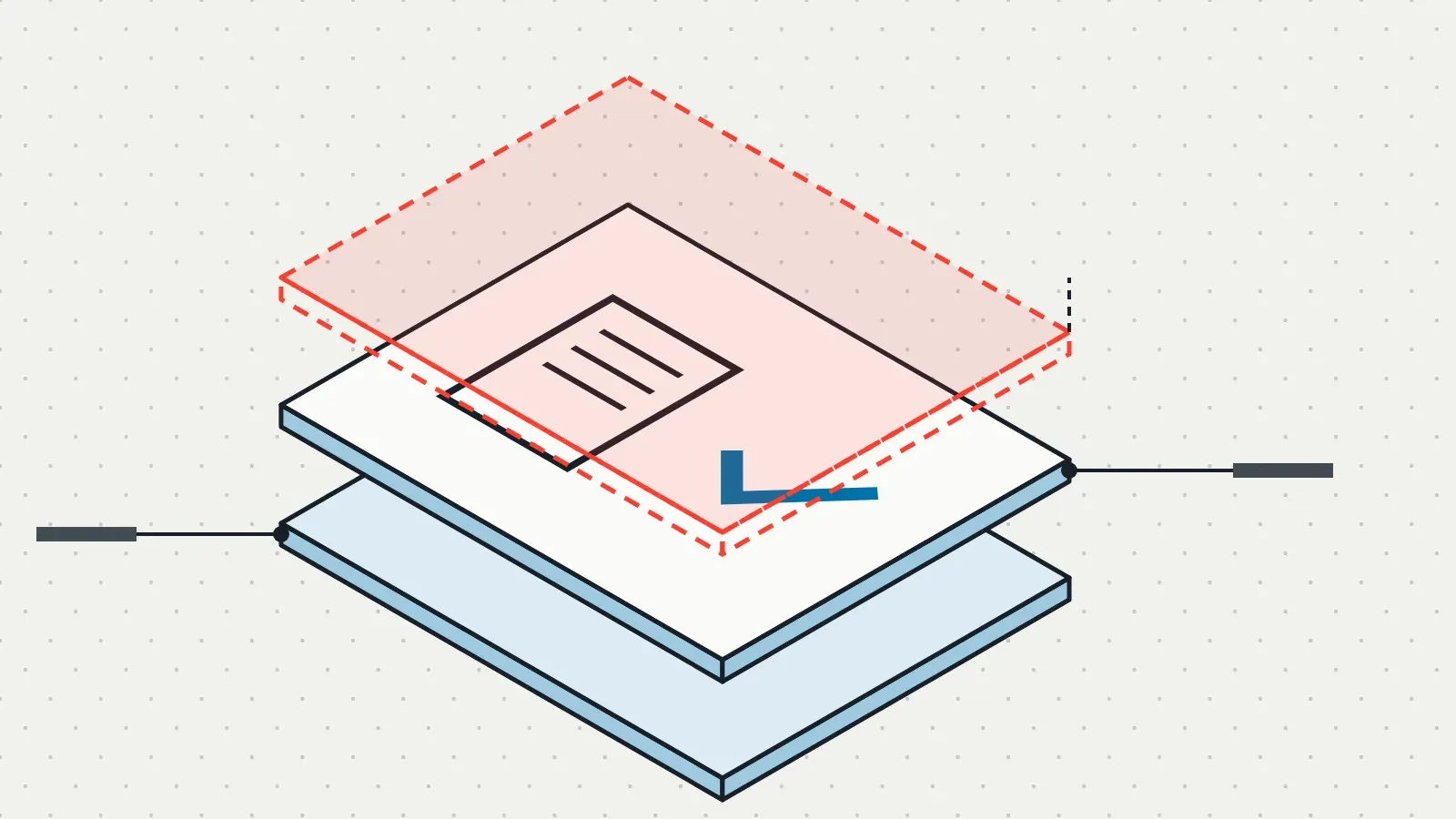
What accident forgiveness changes
After an at-fault accident, an insurer may raise your premium at renewal, often through a surcharge set by its rating rules. The NAIC describes accident forgiveness as an insurer's agreement not to raise your premium after such an accident. The Massachusetts Division of Insurance puts it as an agreement not to factor the accident into the calculation of your premium.
That is the whole promise. It sits beside the policy's coverages, not inside them. The claim is handled the way any claim is: your liability coverage pays the other people, collision pays for your car after the deductible, and the forgiveness only matters when the renewal price is set.
What it does
Keeps a qualifying at-fault accident out of your premium calculation with the insurer that promised it.
What it doesn't do
Pay any part of the loss, waive the deductible, or remove the accident from your driving record.
How you get it
The NAIC lists three routes. Some insurers include forgiveness in a standard policy, usually at a higher premium. More often it is an endorsement, an option you add for a fee. Insurers also use it as a reward for loyal customers and, sometimes, to attract drivers switching from another company.
The route changes the trade. An earned or included program adds no separate line to your bill, but you can't use it until you meet its conditions. A paid endorsement has a visible price, and the NAIC notes that waiting periods range from immediate to as long as five years, so a paid version is not always active on day one either. Ask which kind you are being offered and when it starts to apply.
| Condition | What insurers commonly set | What to ask |
|---|---|---|
| Time with the insurer | A number of years as a customer | How many years, and does a lapse reset it? |
| Clean record | Several years without accidents; some count tickets | Does one speeding ticket disqualify me? |
| Waiting period | From immediate up to five years | When does it start for a new policy? |
| Who must qualify | Sometimes every driver on the policy | Does a teen driver's record count? |
| How many accidents | One, or more in some programs | Per policy or per driver, and when does it reset? |
Insurers write the details into their own rules. Amica, for example, says its auto claims forgiveness comes with its Signature auto policies and may waive the first eligible at-fault accident for a driver with a clean record for the three years before the loss, with no other claim waived in that time. Amica adds that an eligible status does not guarantee a loss will be forgiven and that rules vary by state.
What it leaves in place
- Your deductible. Forgiveness affects price, not payment; you still pay the collision deductible on your own car.
- Your driving record. The Massachusetts Division of Insurance notes the accident stays on it, and a new insurer may count it if you switch.
- Other rating factors. Forgiveness covers the accident. Tickets, a new driver or a new car can still move the price.
- Your eligibility next time. A used forgiveness may not be available again soon; Amica's, for example, will not waive a claim if another was waived in the prior three years.
Why the rules differ by state
Surcharges are not ad hoc decisions; they come from an insurer's rating rules, and states regulate those rules. New York shows how strict that can be: surcharges there follow each insurer's filed merit rating plan under Regulation 100, and a 2006 opinion of the state's Insurance Department said an insurer may not waive an accident surcharge outside those filings. The same opinion noted that most insurers there keep an accident surcharge for three years. A forgiveness program, in a state like that, has to be part of the filed rules.
That is one reason insurers say availability and rules vary by state. Your state insurance department can tell you what an insurer may surcharge for; your state menu page links to it.
Who it fits
Forgiveness is worth most to a driver who expects to stay with one insurer for years and whose premium would rise sharply after a single accident. It is worth less if you change insurers often, since it doesn't follow you, or if your household has a driver whose record would keep the policy from qualifying.
If it is sold as a paid option, weigh the yearly cost against the increase it would prevent, and remember it may never be used. The add-on break-even calculator helps you set the two side by side.
How to check whether you have it
- Read the declarations page and endorsements. A paid version is usually listed as an endorsement with a premium; an earned one may appear only in the insurer's program rules.
- Ask for the eligibility rules in writing. Years with the insurer, clean-record period, and whether all drivers must qualify.
- Ask how many accidents it forgives and whether it applies per driver or per policy.
- Ask what happens after it is used. Find out when it renews, and see how endorsements attach to a policy.
Questions drivers ask
Does accident forgiveness remove the accident from my record?
No. The Massachusetts Division of Insurance notes the accident stays on your driving record, and a new insurer may count it if you switch. Forgiveness only keeps the insurer that promised it from raising your premium for it.
Do I still pay my deductible with accident forgiveness?
Yes. Forgiveness is about the price of your next policy term. The claim is paid under your coverages as usual, minus the deductible.
Can a speeding ticket cost me accident forgiveness?
It can. The NAIC notes that some insurers look at violations as well as accidents when deciding eligibility, so a single ticket may affect whether you qualify.
Is accident forgiveness the same as a not-at-fault accident rule?
No. Forgiveness is an insurer program for at-fault accidents. Whether an accident you did not cause can raise your premium is a matter of state rules and the insurer's filed rating plan; ask your state insurance department.
Drawn from
- NAIC — Consumer Insight: Time to get smart about accident forgiveness
- Massachusetts Division of Insurance — Accident forgiveness: what you should know
- New York State Insurance Department — OGC Opinion No. 06-11-02 (November 2, 2006), accident surcharges under Regulation 100
- Amica — Auto claims forgiveness (Amica's own program)
Facts on this page were checked against these sources on November 15, 2026. Accident forgiveness is an insurer program, not a coverage defined in the standard policy, so eligibility and limits depend on the insurer and the state; the Amica terms are one example, not a market standard.
Have this coverage priced
CoverOath doesn't sell insurance. Answer five questions and CoverOath passes your request to licensed insurance agents and insurers, who can quote the coverage; you decide whether to buy anything.
- 1 The coverage you want priced.
- 2 Where an agent can reach you, and your consent.
- 3 A licensed insurance agent or insurer contacts you with a quote. Nothing is bought until you agree.
CoverOath is not paid by you. The licensed insurance agents and insurers who contact you set their own prices and terms. How we make money.
Adjacent layers
-
Add-on
Vanishing deductible
Lowers your collision and comprehensive deductible for each claim-free year; Nationwide's is $100 a year, $500 max.
-

Fine print
Endorsements and riders
Written changes attached to your policy: they add coverage, remove it, or rewrite the form for your state.
-
Core coverage
Collision coverage
Pays to fix or replace your car after a crash, at fault or not, minus your deductible and up to its value.