UM + UIM required
Virginia coverage menu: higher liability floor, UM and UIM on every policy
Virginia raised its minimum limits in 2025 and ended the option to pay a fee instead of insuring a car in 2024. Every policy now carries liability plus uninsured and underinsured motorist coverage. Here is what each line pays.
By CoverOath Editorial Team Updated 6 min read
The promise, in short
Virginia requires 50/100/25 liability on policies effective on or after January 1, 2025: $50,000 per injured person, $100,000 per crash and $25,000 for property damage. Every policy must also include uninsured and underinsured motorist coverage at your liability limits, plus at least $20,000 of uninsured motorist property damage. A named insured can turn down the amount above the legal minimum, not the coverage itself. Since July 1, 2024 every registered vehicle must be insured; the uninsured motor vehicle fee is gone. The State Corporation Commission's Bureau of Insurance takes complaints at 877-310-6560.
- Minimum liability
- 50/100/25
- PIP/MedPay
- No PIP; MedPay optional
- UM/UIM
- Both required
Virginia coverage menu
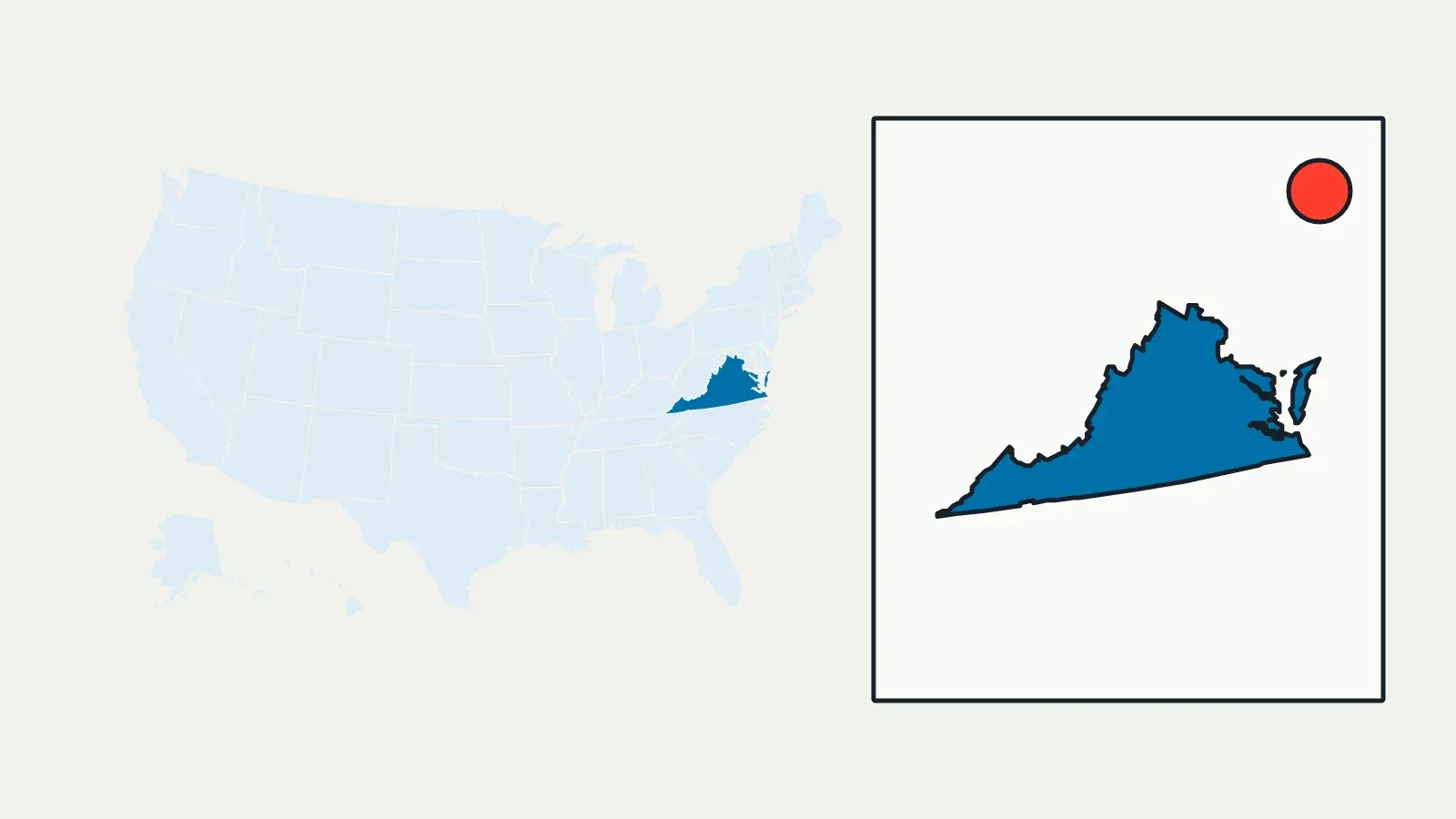
What a Virginia policy must carry
Virginia Code §46.2-472 sets the liability floor, and §38.2-2206 adds uninsured and underinsured motorist coverage to every policy. Liability pays people you injure and property you damage. UM and UIM pay you and the people insured on your policy.
| Coverage | Policies effective Jan. 1, 2022 to Dec. 31, 2024 | Policies effective on or after Jan. 1, 2025 |
|---|---|---|
| Bodily injury, per person | $30,000 | $50,000 |
| Bodily injury, per accident | $60,000 | $100,000 |
| Property damage | $20,000 | $25,000 |
A policy that renewed in 2025 or later should show at least 50/100/25. If yours still shows 30/60/20, ask the insurer when it last renewed. The liability limits page explains how people choose limits above the floor.
UM and UIM are part of every policy
Uninsured motorist
Pays your injuries and property damage when the at-fault driver has no insurance or cannot be identified. Its limits equal your liability limits. See UM coverage.
Underinsured motorist
Pays when the at-fault driver's coverage is less than your damages, up to your UIM limit, which must equal your UM limit. See UIM coverage.
UM property damage
At least $20,000 for damage to your property. When the uninsured driver cannot be identified, the insurer may exclude the first $200 of the loss.
You can lower UM/UIM, but not remove it. One named insured can reject the coverage above the legal minimum by notifying the insurer, and that choice binds everyone on the policy. UM/UIM can never be higher than your liability limits.
Virginia's UIM rule is generous to the injured person. Under §38.2-2206, underinsured coverage is paid without a credit for the at-fault driver's liability payment, unless a named insured signed an election to reduce it. In plain terms, your UIM limit usually sits on top of what the other driver's insurer pays, rather than being reduced by it. Check your policy and any election form you signed.
Hit-and-run and multiple policies
If an unknown vehicle causes a crash without touching your car, the statute requires you to report the accident promptly to your insurer or to a law-enforcement officer, or as soon as reasonably practicable. Report it the same day if you can.
The statute does not use the word stacking. When an injured person is covered under more than one policy, it sets an order of payment instead: the policy on the vehicle the person was in pays first, then a policy where the person is a named insured, then a policy where the person is another insured. Insurers at the same level share the claim in proportion to their limits. Whether two cars on one policy can be added together depends on the policy's wording. Read how stacking works.
Medical expense benefits and other options
- Medical expense benefits, Virginia's name for MedPay, is optional. The Bureau of Insurance guide says it pays medical and funeral expenses whatever the fault, usually for expenses within three years of the crash, and can include an income loss benefit.
- Collision and comprehensive pay for your own car; a lender or lease company will require both.
- Add-ons such as rental reimbursement and gap coverage.
Where to check and complain
- Read your declarations page for liability, UM/UIM and UM property damage limits.
- Ask your insurer for any rejection of higher UM limits or election to reduce UIM that is on file.
- Contact the Virginia Bureau of Insurance, Property and Casualty Consumer Services, at 877-310-6560 if an insurer will not explain a coverage or a claim decision.
Questions drivers ask
What are Virginia's minimum car insurance limits?
For policies effective on or after January 1, 2025: $50,000 per person, $100,000 per accident and $25,000 for property damage. Before that the minimum was 30/60/20.
Can I reject uninsured motorist coverage in Virginia?
Not entirely. Every policy must include UM and UIM. A named insured can reject only the amount above the legal minimum, which lowers UM/UIM to the minimum limits.
Can I still pay the uninsured motor vehicle fee in Virginia?
No. The Virginia DMV says the fee option ended on July 1, 2024. Every vehicle registered in Virginia must now be insured.
Does Virginia require PIP?
No. Virginia has no PIP requirement. Medical expense benefits, similar to MedPay, are optional.
Drawn from
- Va. Code §46.2-472, minimum liability limits (2025 Code of Virginia, Justia)
- Va. Code §38.2-2206, uninsured and underinsured motorist coverage (2025 Code of Virginia, Justia)
- Virginia DMV — Insurance requirements
- Virginia DMV — New laws take effect July 1, 2024 (end of the uninsured motor vehicle fee)
- Virginia State Corporation Commission, Bureau of Insurance — Consumer's Guide for Auto Insurance
- Virginia Bureau of Insurance — Consumer's guide to automobile insurance (2024; phone numbers, UM/UIM)
Facts on this page were checked against these sources on November 15, 2026. Virginia's minimum limits rose from 30/60/20 to 50/100/25 for policies effective on or after January 1, 2025, and the uninsured motor vehicle fee option ended on July 1, 2024.
Have this coverage priced
CoverOath doesn't sell insurance. Answer five questions and CoverOath passes your request to licensed insurance agents and insurers, who can quote the coverage; you decide whether to buy anything.
- 1 The coverage you want priced.
- 2 Where an agent can reach you, and your consent.
- 3 A licensed insurance agent or insurer contacts you with a quote. Nothing is bought until you agree.
CoverOath is not paid by you. The licensed insurance agents and insurers who contact you set their own prices and terms. How we make money.
Adjacent layers
-
Core coverage
Uninsured motorist coverage (UM)
Pays your injuries when an uninsured or hit-and-run driver is at fault. Required in about 20 jurisdictions.
-
Core coverage
Underinsured motorist coverage (UIM)
Pays your injuries above the at-fault driver's limit. Added-on UIM stacks on their payment; offset UIM subtracts it.
-
Fine print
How much liability coverage you need
State floors run as low as 15/30/5. Size your limit to what you own and earn, then add an umbrella if needed.